

How to Find Phone Repair Technicians You Can Trust

Table of Contents
Start With the Damage, Not the Shop
How to Choose a Phone Repair Shop: A 5-Step Vetting Method
Questions to Ask Before You Hand Over Your Device
How to Compare Two Shops Side by Side
Credentials and Training: What a Qualified Phone Repair Technician Looks Like
Phone Repair Cost: Reading Quotes and Spotting Hidden Fees
The Four Numbers That Actually Matter
Hidden Fees to Watch For
Is the Repair Worth It? A Simple Rule
Phone Repair Warranty: What Should Be Covered
Phone Repair Data Privacy: Protecting Your Information
Independent Shop vs. Manufacturer Service: Which Fits Your Repair
Conclusion
Frequently Asked Questions
Last Updated: October 19, 2026
Start With the Damage, Not the Shop
Before you call anyone, figure out what actually broke. That sounds obvious, but it changes which phone repair technicians you should even be talking to. A cracked screen is a parts-and-labor job. A phone that took a dunk in the sink is a diagnostics job, and not every shop handles water damage well.
Here at PHONEPROBS, we see this play out daily. Someone walks in convinced they need a screen replacement when the real problem is a swollen battery pushing the display out of the frame. Different repair, different price, different risk.
So start here:
Cracked glass, dead pixels, or a touchscreen that won't respond means screen repair.
A phone that dies by noon or shuts off randomly points to battery replacement.
Blurry photos, a cracked lens, or a black camera app means camera repair.
No charge, a loose cable, or a port that only works at an angle points to the charging port.
It got wet means stop charging it and get it looked at fast.
Write down the symptoms before you walk in. A good technician will ask what happened, and a clear answer saves everyone time.
How to Choose a Phone Repair Shop: A 5-Step Vetting Method
The best way to choose a phone repair shop is to verify the technician before you hand over the device, not after something goes wrong. Use this five-step method every time.

Step 1: Search local, then filter hard. Look for shops near you with recent reviews that mention your exact device.
Step 2: Call and ask about your model. Give the technician your exact model number, not just the marketing name. If they hesitate or say "bring it in and we'll see," that's a yellow flag.
Step 3: Get a written quote before any work starts. A repair quote should list the part and the labor separately, state whether the diagnostic fee is waived on approval, and give a total out-the-door number.
Step 4: Ask about turnaround and parts sourcing. Same-day repair is normal for screens and batteries when the part is in stock. If they quote a week, ask why.
Step 5: Confirm the warranty in writing. Ask what the warranty covers (parts, labor, or both), how long it lasts, and what voids it. Get the terms on your receipt or in a text before you pay.
Questions to Ask Before You Hand Over Your Device
Bring this list. A shop that answers all six calmly is a shop worth trusting.
What part are you installing, and is it new, refurbished, or OEM-equivalent?
What's the total out the door, parts and labor, including any diagnostic fee?
How long will it take, and can I wait on site?
What does your repair warranty cover, and for how long?
Will my data stay on the device, and who has access to it during the repair?
What happens if the repair doesn't fix the problem, do I pay again?
Pro Tip Ask the technician to show you the replacement part still in its packaging before installation. Shops that do quality work are happy to. Shops that don't will get weird about it.
How to Compare Two Shops Side by Side
When you have quotes from two or three shops, compare them on the same five lines so the decision is not just price:
What to compare | What good looks like | What to flag |
Total price | One out-the-door number, diagnostic fee disclosed | Price that changes after drop-off |
Parts | Named brand or grade, shown in packaging | "Premium part" with no explanation |
Turnaround | Same-day for common repairs, stated up front | Vague "a few days" with no reason |
Warranty | Written, covers parts and labor, 30-90 days | Verbal only, or parts-only |
Data handling | Clear policy, passcode not required for screen repair | Asks for passcode with no reason |
A shop that wins on three of five lines is usually the better bet than the cheapest quote. The cheapest quote often wins only on price and loses on parts grade and warranty.
Watch Out Avoid any shop that wants to "take it in the back" without explaining the repair first. You should always know what's being done to your device and why.
Credentials and Training: What a Qualified Phone Repair Technician Looks Like
A qualified phone repair technician has hands-on training with your specific device type and can explain the repair process in plain language. Formal certification helps, but it isn't the only signal.
Look for these markers:
Device-specific experience. Ask how many of your model they've repaired this year.
Industry training. Programs like CompTIA's A+ certification cover hardware fundamentals, and some manufacturers run their own authorized training.
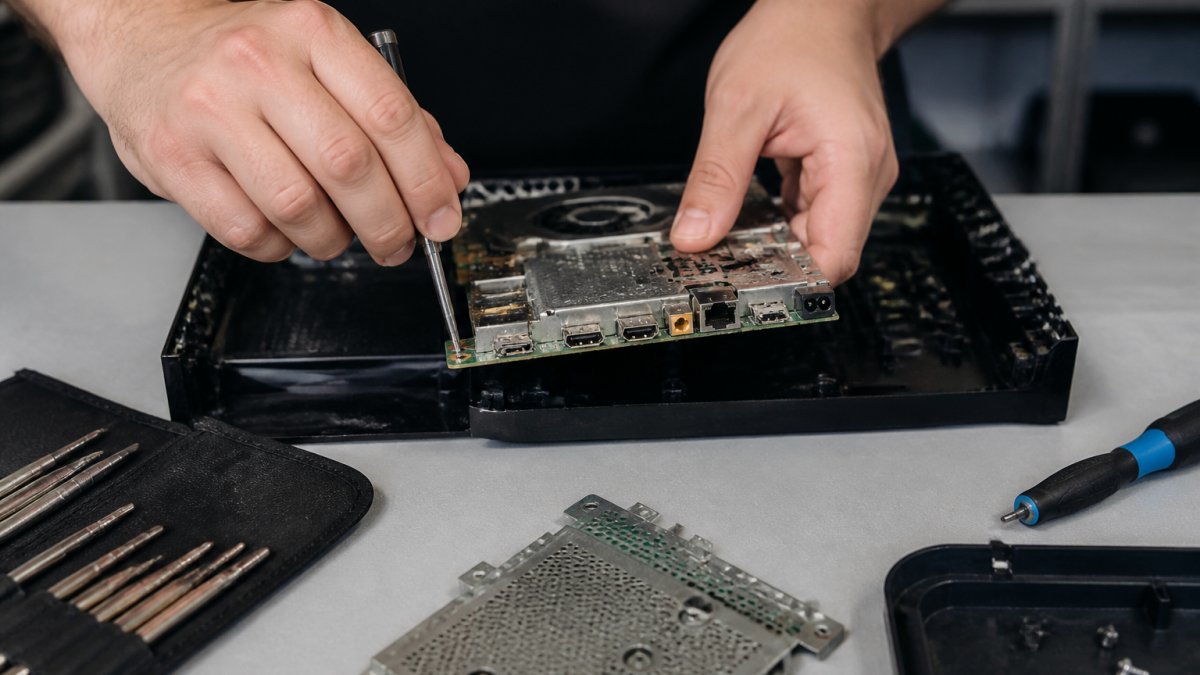
A clean, organized bench. Good technicians keep tools and parts sorted. Chaos on the bench usually means chaos inside your phone.
Comfort with diagnostics. A real technician runs device diagnostics before quoting, not after.
What most guides miss is that certifications vary wildly in quality. A framed certificate on the wall means less than a technician who can tell you exactly which screwdriver your phone's chassis needs.
Phone Repair Cost: Reading Quotes and Spotting Hidden Fees
Phone repair cost should be a single number you agree to before work starts. If a shop can't give you that, walk. The harder skill is comparing two quotes that look similar but are not.
A fair repair quote breaks down into three parts: the replacement part, the labor, and any diagnostic fee. Ask whether the diagnostic fee is waived if you approve the repair. Many shops do this, and it's a fair question. Ask for the quote in writing (text or email) so the numbers don't drift.
The Four Numbers That Actually Matter
When you compare quotes, put these four numbers side by side:
Out-the-door total, parts, labor, tax, and any shop-supplies charge in one number.
Parts grade, new OEM, OEM-equivalent, refurbished, or aftermarket. Ask for the brand or grade in writing.
Warranty length and coverage, days, and whether it covers parts, labor, or both.
Turnaround, same-day, next-day, or order-in, and whether the part is in stock.
A quote that is $30 cheaper but uses an aftermarket panel with a 14-day parts-only warranty is not actually cheaper once you weight the risk. A quote that is $30 higher but uses an OEM-equivalent part with a 90-day parts-and-labor warranty is often the better deal.
Hidden Fees to Watch For
"Shop supplies" charges tacked on at checkout
Diagnostic fees that appear only after the repair is done
Data transfer fees for something that should be included
"Premium part" upcharges with no explanation of what makes it premium
Restocking or "bench" fees if you decline the repair after diagnosis
Ask before drop-off: "If I decline the repair after diagnosis, what do I owe?" The answer should be a clear number, ideally zero or the stated diagnostic fee only.
Is the Repair Worth It? A Simple Rule
Compare the out-the-door repair quote to the current value of the device, not to what you paid for it. A common pattern is that a repair costing more than roughly half the device's current replacement value is a poor bet, especially on older models where parts availability is shrinking. An honest technician will tell you when a repair no longer makes financial sense.
For comparison, a new unlocked phone in our shop runs from $99.99 for a Motorola G Play 2024 (Blue) 64GB - Unlocked up to $499.99 for an Apple iPhone 15 Plus (Black) 128GB - Unlocked. That range is useful as a sanity check: if a screen repair quote approaches the price of a new budget device, ask whether replacement is the better path.
Key Takeaway Compare quotes on four lines, total, parts grade, warranty, turnaround, not on price alone. The cheapest quote is often the one with the thinnest warranty and the lowest-grade part.
Phone Repair Warranty: What Should Be Covered
A phone repair warranty should cover both the replacement part and the labor for a set period. Anything less is a red flag.
Ask these questions about any warranty:
How long does it last? Thirty days is common. Ninety days is better.
Does it cover parts, labor, or both?
What voids it? Water damage after a screen repair usually does.
Is it written down, or just a verbal promise?
Get the warranty terms in writing or on your receipt. A verbal "we stand behind our work" means nothing when you're back two weeks later with a dead screen.
Key Takeaway A repair without a written warranty is a gamble. Always get the terms on paper before you pay.
Phone Repair Data Privacy: Protecting Your Information
Your phone holds your photos, messages, banking apps, and passwords. Handing it to a stranger requires trust, and you should verify that trust before you hand it over.
Here's how to protect yourself:
Back up first. Cloud backup or a computer sync takes minutes and protects you if something goes wrong.
Log out of sensitive apps if you can, especially banking and email.
Ask about their data policy. A shop should tell you clearly whether they access your data and how they handle it.
Watch for unnecessary requests. A screen repair doesn't require your passcode. If they ask for it, ask why.
At PHONEPROBS, we treat data privacy as part of the job, not an afterthought. If a shop gets defensive when you ask about data handling, that tells you something.
Independent Shop vs. Manufacturer Service: Which Fits Your Repair
An independent repair shop usually wins on speed and price. Manufacturer service wins on parts authenticity and warranty continuity. The right pick depends on your device and your situation.
Factor | Independent Shop | Manufacturer Service |
Turnaround | Often same-day | Usually days to weeks |
Cost | Typically lower | Typically higher |
Parts | New, refurbished, or OEM-equivalent | OEM parts |
Warranty impact | May void manufacturer warranty | Preserves it |
Convenience | Walk-in service, local | Mail-in or appointment |
Choose manufacturer service if your device is still under its original warranty and you don't want to risk voiding it. Choose an independent shop if you need fast repair, you're out of warranty, or you want a quote before committing.
For water damage, an independent shop with real diagnostics experience is often your best bet. Manufacturer service may just replace the whole device, which costs more.
Conclusion
Finding phone repair technicians you can trust comes down to asking the right questions before you hand over your device. Check the shop's experience with your model, get a written quote, confirm the warranty, and ask how they handle your data.
At PHONEPROBS, we repair phones, consoles, computers, and laptops with fast quotes and honest answers. We handle water damage, unwanted software, and everything in between. Stop by for a professional quote and let us take a look.
Frequently Asked Questions
How can I tell if a phone repair technician is qualified?
Ask about training and certifications, then check how they answer technical questions. A qualified phone repair technician can explain what failed, which replacement parts they will use, and how long the job takes. Look for shops that specialize in specific brands, keep diagnostic tools on site, and offer a written phone repair warranty. Reviews mentioning repeat visits and honest diagnoses are a stronger signal than a wall of certificates.
Can phone repair shops access your personal data?
Yes, in theory. A technician with physical access to an unlocked device can view photos, messages, and accounts. Protect yourself by backing up and wiping the phone before repair when possible, or ask the shop to work with the screen locked. Reputable shops have a written phone repair data privacy policy and will sign in a repair log. Ask directly: who handles the device, and is it kept in a secure area?
Do phone repair shops offer a warranty on parts and labor?
Most independent shops do, but terms vary widely. A typical phone repair warranty covers the specific part replaced for 30 to 90 days and excludes new damage like drops or water exposure. Get the terms in writing before you leave the device, and confirm whether the warranty covers labor as well as parts. If a shop offers no warranty at all, treat that as a warning sign.
Is it better to use the manufacturer or an independent technician?
It depends on the repair. Manufacturer service is the safer route for in-warranty devices and complex failures like motherboard issues, but it usually means shipping the phone out and waiting days. Independent shops often offer same-day repair, walk-in service, and lower phone repair cost on common jobs like screen replacement and battery replacement. Compare quotes from both before deciding.
Ready to get your device fixed? Book your repair with PHONEPROBS today and get a straight answer on cost, turnaround, and warranty before you commit.
BOOK YOUR REPAIR

Comments