

Phone Repair Warranty Explained 2026: Your Complete Guide

Table of Contents
What Is Phone Repair Warranty and Why It Matters in 2026 Warranty vs. Insurance: Key Differences
Warranty vs. Insurance: Key Differences
Manufacturer Phone Warranty 2026: What's Actually Covered Limited Lifetime vs. Standard Coverage Periods Component Coverage and Exclusions
Limited Lifetime vs. Standard Coverage Periods
Component Coverage and Exclusions
Extended Phone Warranty Cost 2026: Is It Worth Your Money Premium Costs and Deductible Structures Service Contract Terms and Claim Limits
Premium Costs and Deductible Structures
Service Contract Terms and Claim Limits
Common Phone Repair Exclusions You Need to Know Accidental Damage vs. Manufacturer Defects What Voids Your Warranty
Accidental Damage vs. Manufacturer Defects
What Voids Your Warranty
Right to Repair Laws 2026: How Consumer Rights Affect Your Warranty
How to File a Phone Repair Warranty Claim: Step-by-Step Process Gathering Proof of Purchase and Documentation Working with Authorized Service Providers
Gathering Proof of Purchase and Documentation
Working with Authorized Service Providers
Third-Party Repairs and DIY Fixes: Impact on Your Warranty Coverage
Digital Warranty Management: Tracking Coverage in 2026
Phone Repair Warranty Explained 2026: Your Complete Guide
Last Updated: July 31, 2026
Understanding phone repair warranty explained 2026 is critical for protecting your device investment. Knowing what your warranty covers can save you hundreds of dollars when repairs are needed.
What Is Phone Repair Warranty and Why It Matters in 2026
Phone repair warranty is a manufacturer or third-party agreement covering repair or replacement costs for device failures due to defects in materials or workmanship. Unlike insurance, which protects against accidents you cause, warranties cover manufacturer defects and hardware failures during normal use.
The warranty landscape has shifted significantly in 2026. Consumers now have more options, manufacturer coverage, extended warranties, device protection plans, and right-to-repair laws that strengthen your position. Repair costs have climbed: screen replacement on flagship devices costs $300-500, battery replacement $150-250, and back panel repairs $200-400. A single incident without proper coverage can be expensive.
Pro Tip Check your device's warranty status immediately after purchase. Many manufacturers offer limited time to add extended coverage at a discount, and that window closes quickly.
Manufacturer Phone Warranty 2026: What's Actually Covered
Manufacturer warranties cover hardware defects and component failures during normal use, including electrical failures, mechanical failures, and manufacturing defects in processors, displays, batteries, or charging components. They explicitly exclude physical damage, liquid damage, software issues, and normal wear and tear.
Most manufacturers offer one year of limited coverage as standard. The critical distinction is between inclusionary coverage (what IS covered) and exclusionary coverage (what IS NOT). Inclusionary coverage is straightforward: manufacturing defects. Exclusionary coverage is where real restrictions live. Water damage, drops, screen cracks, battery swelling, and cosmetic damage are universally excluded.
Limited Lifetime vs. Standard Coverage Periods
A limited lifetime warranty sounds broader than it actually is. In 2026, this typically means coverage for the original owner's ownership period, not the device's entire lifespan. If you sell the phone, coverage usually transfers with reduced benefits, often limited to 30-90 days. Some manufacturers exclude batteries from lifetime coverage, limiting battery defects to one year.
Standard one-year coverage is the baseline across the industry. A device that fails on day 366 receives zero support, while one failing on day 365 gets full replacement at no cost.
Component Coverage and Exclusions
Batteries are typically covered for one year or until capacity degrades below 80%, whichever comes first. Screens are covered if they fail due to manufacturing defect, not if cracked from impact. Charging ports are covered for defects but not liquid damage or wear from repeated use. Water damage is universally excluded, even on water-resistant phones. Cosmetic damage, scratches, and dents are never covered.
Extended Phone Warranty Cost 2026: Is It Worth Your Money
Extended warranties are service contracts extending coverage beyond the standard one-year period. These typically cost 10-25% of the device's purchase price and add one to three years of coverage. A $1,000 phone might have an extended warranty costing $100-250 for two additional years.
The math on extended warranties is deliberately opaque. Manufacturers price these plans knowing most phones don't fail. The question isn't "will my phone definitely break?" but "is the probability of needing repairs high enough that paying now is cheaper than paying later?"
Premium Costs and Deductible Structures
Extended warranty pricing varies widely. Apple Care+ costs around $200-300 for two years, including accidental damage coverage and battery replacement. Samsung Care+ runs $150-250 for similar coverage. Third-party plans through retailers often run $100-200 but may have lower maximum claim values.
Deductibles are crucial. Many plans include a per-incident deductible of $25-100. A plan costing $100 becomes expensive if every repair requires a $75 deductible. Some plans waive the deductible for certain damage types or after a certain number of claims.
Service Contract Terms and Claim Limits
Service contracts specify maximum claim values. A plan might cover up to $500 per claim or $1,000 total across the contract period. If your phone needs a $600 screen replacement and your plan has a $500 limit, you pay the difference. Some plans cap claims at one or two repairs per year.
Coverage limitations surprise most people. A plan might cover hardware failures but exclude battery degradation. It might cover accidental damage but exclude liquid damage. The replacement option is valuable, some plans allow replacement of your entire phone rather than repair if damage is extensive.
Warranty Type | Coverage Period | Typical Cost | Covers Accidental Damage | Deductible |
Manufacturer Standard | 1 year | Included | No | None |
Manufacturer Extended | 2-3 years | $100-300 | No (usually) | None |
Retail Extended Plan | 2-3 years | $80-200 | Yes | $25-75 |
Insurance Plan | 1-2 years | $120-200 | Yes | $50-100 |
AppleCare+ | 2 years | $200-300 | Yes | $29-99 |
Common Phone Repair Exclusions You Need to Know
The gap between what warranties claim to cover and what they actually cover is where most disputes arise. Exclusions are written in technical language, and manufacturers rely on most people not reading them until it's too late.
Accidental Damage vs. Manufacturer Defects
Accidental damage is anything you did: dropping the phone, spilling liquid on it, or exposing it to extreme temperatures. Manufacturer defects are failures from poor design, defective components, or assembly errors. The boundary between these categories is blurry.
A phone that won't charge might be a defective charging port (covered) or a port damaged by liquid exposure (excluded). A cracked screen might be a manufacturing defect or a crack from impact (excluded). Manufacturers almost always interpret failures as accidental damage, shifting the burden to you to prove otherwise. Proof of purchase and device history matter enormously.
What Voids Your Warranty
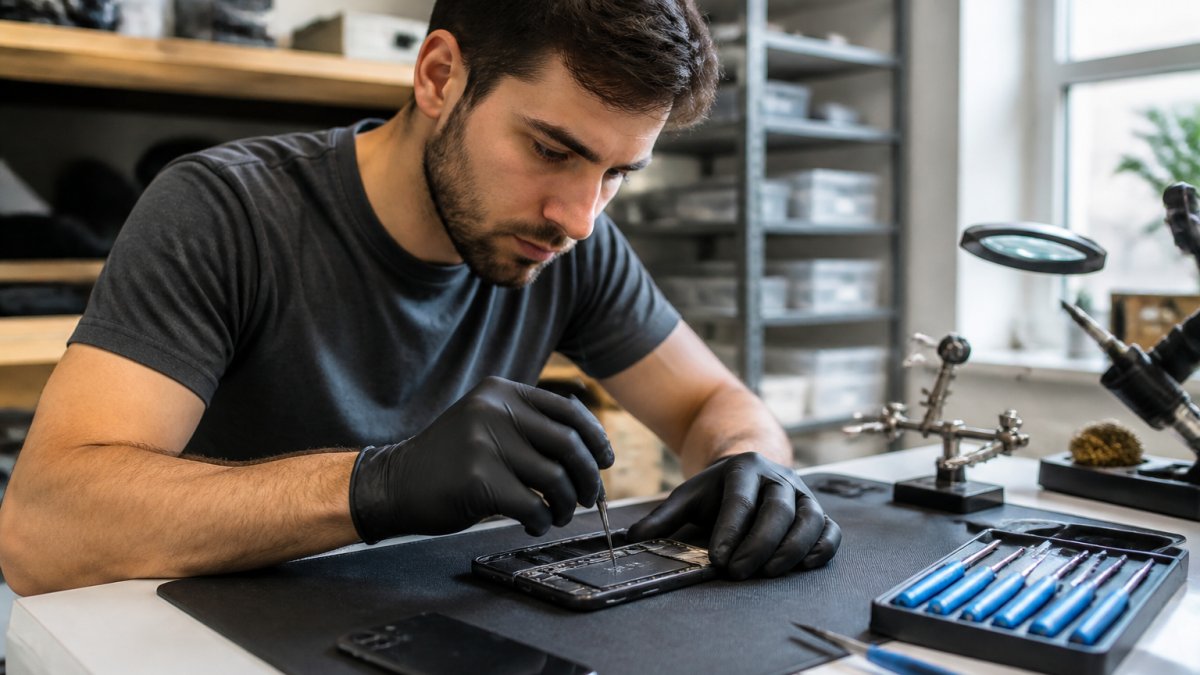
Opening the device yourself, even to replace the battery, voids coverage on most phones. Using non-authorized repair shops voids coverage; if a third-party shop causes further damage, the manufacturer won't cover it. Modifying software, jailbreaking, or rooting the phone can void coverage. Water damage voids coverage even on water-resistant phones if exposure exceeds incidental contact.
Right to Repair Laws 2026: How Consumer Rights Affect Your Warranty
The right to repair movement has fundamentally changed warranty discussions in 2026. Several U.S. states have passed legislation giving consumers the right to repair their own devices and use third-party repair shops without voiding warranties. Massachusetts passed a right to repair law in 2024 that took effect in 2026, requiring manufacturers to provide repair manuals, parts, and tools to independent repair shops at reasonable costs. New York has similar legislation in effect.
This changes warranty dynamics significantly. You can now take your phone to a third-party repair shop in states with right to repair laws, and the manufacturer cannot automatically void your warranty. However, the manufacturer can still deny coverage for damage caused by the third-party repair itself.
How to File a Phone Repair Warranty Claim: Step-by-Step Process
Filing a warranty claim requires documentation, patience, and knowing what to expect. Start by gathering your proof of purchase: the original receipt, order confirmation email, or invoice. Document the problem by taking clear photos and videos of the malfunction. Contact the manufacturer's support line or visit an authorized service provider with your proof of purchase and device serial number ready.

Gathering Proof of Purchase and Documentation
Proof of purchase can be a physical receipt, digital receipt email, credit card statement, or order confirmation. If you've lost the original receipt, check your email for order confirmations. Most manufacturers can look up your device using the serial number and purchase history if you registered the device.
Device serial numbers are found in settings or on the device's back panel. Keep this information accessible; you'll need it for every warranty interaction. Document any error messages or unusual behavior to strengthen your claim.
Working with Authorized Service Providers
Authorized service providers are your gateway to warranty coverage. Using an unauthorized shop can complicate or void your claim. When you visit, bring all documentation: proof of purchase, device serial number, and any photos or videos of the malfunction. Get everything in writing, including a written estimate before any work begins. If they deny coverage, ask why specifically and get the reason in writing.
Most authorized service providers complete simple repairs like screen or battery replacement within one to three days. More complex repairs might take a week.
Third-Party Repairs and DIY Fixes: Impact on Your Warranty Coverage
Taking your phone to a third-party repair shop or attempting repairs yourself creates warranty complications. In states without right to repair protections, using a third-party shop can void your warranty entirely. However, this is changing in 2026. States with right to repair laws prevent manufacturers from automatically voiding warranties based on third-party repairs. Instead, the manufacturer must prove that the third-party repair caused the failure you're claiming.
DIY repairs are even riskier. Opening your phone yourself almost universally voids the warranty. Even if the failure is unrelated to the battery replacement, manufacturers can point to the opening of the device as grounds for denial.
Watch Out If you attempt a DIY repair, take detailed photos and videos of every step. If something goes wrong and you need to claim it under warranty, you'll need to prove that your repair didn't cause the failure.
Digital Warranty Management: Tracking Coverage in 2026
In 2026, managing your warranty is increasingly digital. Most manufacturers offer apps or online portals where you can check coverage status, file claims, and track repairs. Register your devices with the manufacturer immediately after purchase so they can track your warranty period.
Set reminders for when your warranty expires. If you have a one-year manufacturer warranty, set a reminder for month 11 to decide whether to purchase extended coverage. Keep digital copies of all warranty documentation in cloud storage so you can access them from anywhere.
Navigating phone repair warranties in 2026 requires understanding the distinctions between coverage types, knowing what's actually excluded, and documenting everything. The landscape is improving for consumers thanks to right-to-repair laws, but manufacturers still control the process. At PHONEPROBS, we help customers understand their coverage options and navigate claims when things go wrong. Whether you need a quick repair quote, help determining what your warranty covers, or assistance filing a claim, our team can walk you through the process and make sure you're not overpaying for repairs you might be covered for. Stop by for a professional assessment and let us help you protect your device investment.
Frequently Asked Questions
What does a standard phone repair warranty cover in 2026?
Standard manufacturer warranties typically cover hardware failures, electrical defects, and mechanical failures caused by manufacturing defects, not user damage. Coverage usually includes repair labor and replacement parts for qualifying issues. Most warranties last 12 months from purchase. However, exclusionary coverage is common: accidental damage, water damage, and normal wear aren't included. Check your specific device's warranty documentation for exact component coverage, as battery degradation and screen damage often fall outside standard protection.
How do extended phone warranties differ from manufacturer warranties, and is an extended phone warranty cost justified in 2026?
Manufacturer warranties cover defects; extended warranties (device protection plans) add accidental damage coverage for a premium. Extended plans typically include a deductible per claim and may cover screen replacement, water damage, and mechanical failure beyond the original period. Costs vary by device and coverage level, contact PHONEPROBS for current pricing on plans that fit your needs. Extended warranties make sense if you're accident-prone or rely heavily on your device. Review the deductible and claim limits carefully before purchasing, as some plans have significant out-of-pocket costs.
Does the Right to Repair movement affect my phone repair warranty in 2026?
Right to Repair laws increasingly require manufacturers to provide access to parts and repair documentation, which can reduce warranty voidance for third-party repairs in some states. However, federal law still allows manufacturers to void warranties for unauthorized repairs in most cases. Some states have passed legislation limiting this practice. Check your state's consumer rights laws to understand your protections. Using an authorized service provider remains the safest way to maintain coverage, but repair shop warranty policies vary, always ask whether third-party repairs will affect your device's original warranty status.
What voids a phone repair warranty, and how can I avoid losing coverage?
Common warranty voidance triggers include water damage, physical damage from drops, unauthorized repairs, opening the device yourself, and using non-approved replacement parts. DIY repair attempts almost always void coverage immediately. To protect your warranty: keep proof of purchase, use only authorized service providers, avoid water exposure, and don't attempt repairs yourself. Some exclusionary coverage clauses also void warranties if you've modified software or used the device for commercial purposes. Review your warranty terms carefully and contact PHONEPROBS before attempting any repair to confirm coverage status.
This article was written using GrandRanker

Comments