

Trade in Old Phone for Cash: A 2026 Guide

Table of Contents
How the Trade-In Process Works
How to Wipe Your Phone Before Selling Data Security and Factory Reset Removing Accounts and Verifying the Wipe
Data Security and Factory Reset
Removing Accounts and Verifying the Wipe
Factors That Affect Your Trade-In Value Device Condition and Screen Damage Model Year and Storage Capacity
Device Condition and Screen Damage
Model Year and Storage Capacity
Sell a Broken Phone for Cash
Best Phone Trade-In Sites and Services Carrier Trade-In Programs vs. Third-Party Buyers
Carrier Trade-In Programs vs. Third-Party Buyers
Steps to Prepare Your Device for Sale Getting an Instant Quote and Price Lock Shipping and Logistics
Getting an Instant Quote and Price Lock
Shipping and Logistics
Environmental and Tax Implications
Conclusion
Last Updated: August 8, 2026
How the Trade-In Process Works
Trading in your old phone is straightforward: you get an instant quote, ship your device, and receive payment once the buyer verifies its condition. The entire process typically takes 5-10 business days from shipment to payout. Most buyers use a standardized grading system evaluating physical condition, functionality, and market value.
First, you provide your device's model, storage capacity, and condition details online or in-store. Second, the buyer generates an instant quote. Third, you ship the phone using a prepaid label. Fourth, technicians inspect and verify the device matches your description. Finally, they deposit payment into your chosen account.
Trade-in value fluctuates constantly based on new model releases, carrier promotions, and supply-demand dynamics. A phone worth $200 today might be worth $160 in three weeks after a new flagship launches. This is why requesting a price lock, a guarantee that your quoted price remains valid for a set period, matters significantly.
The difference between selling through a carrier versus a third-party buyer centers on convenience versus maximum payout. Carrier programs like Verizon or AT&T often offer trade-in credit toward a new purchase rather than cash, limiting flexibility. Third-party services typically pay cash directly, though their base offers may be lower than carrier quotes with promotional bumps.
Pro Tip Request a price lock immediately after receiving your instant quote. Most reputable buyers hold quotes for 7-14 days, giving you time to prepare your device without watching the value drop.
How to Wipe Your Phone Before Selling
Wiping your phone completely is non-negotiable before selling. A factory reset removes your personal data, accounts, and settings, but it's not the same as a secure wipe. Factory resets can sometimes be reversed using specialized recovery tools, meaning your deleted photos, messages, and passwords might theoretically be recoverable. A proper wipe ensures data security and protects your privacy.

Data Security and Factory Reset
Back up anything you want to keep using iCloud for iPhone or Google Photos for Android. Then initiate the factory reset through your phone's settings. On iPhone, navigate to Settings > General > Transfer or Reset > Erase All Content and Settings. On Android, go to Settings > System > Reset Options > Erase All Data (Factory Reset).
The factory reset process takes 10-30 minutes depending on your device and involves multiple restarts. After completion, your device returns to its original state. Verify the wipe worked by powering on the device and checking that it prompts you to set it up as new. If you see your old home screen, photos, or apps, repeat the process.
Removing Accounts and Verifying the Wipe
Before the factory reset, remove your Apple ID (iPhone) or Google Account (Android) from the device. On iPhone, go to Settings > [Your Name] > Password and Security > Apps and Websites, then sign out. On Android, open Settings > Accounts, select your Google account, and choose Remove Account.
This prevents the buyer from being locked out by Activation Lock or Factory Reset Protection, security features that require your credentials to reactivate the phone. Leaving these active is one of the most common reasons trade-in offers get rejected or significantly reduced.
After the factory reset completes and you've verified the wipe, power off the device completely. Buyers prefer receiving phones in powered-off state because it reduces accidental data recovery risk and demonstrates professional completion.
Key Takeaway A complete wipe protects your privacy and maximizes your trade-in value. Buyers reject or significantly discount devices with incomplete resets or active security locks.
Factors That Affect Your Trade-In Value
Your phone's trade-in value depends on five primary factors: device model, storage capacity, physical condition, battery health, and current market demand.
Model year is the single biggest driver of value. A two-year-old flagship phone typically trades for 40-50% of its original retail price. A four-year-old device drops to 15-25%. New models released within the last 90 days command premium prices. Older models still have value, particularly popular lines like iPhone or Samsung Galaxy, but expect diminishing returns.
Device Condition and Screen Damage
Physical condition dramatically impacts your final payout. Buyers grade devices on a standard scale: Mint (no visible damage), Excellent (minor cosmetic wear), Good (noticeable but not severe damage), Fair (significant damage but fully functional), and Poor (major damage with possible functional issues).
A screen with a hairline crack drops your value by 20-35%. A shattered screen can reduce offers by 50% or more. Back glass damage is slightly less severe, usually 15-25% reduction. Water damage or corrosion typically results in rejection unless the device powers on and functions normally, in which case expect 40-60% off the clean device price.
Cosmetic damage matters far less than functional damage. A phone with a cracked back glass but perfect screen and battery might trade for 70-80% of clean device value. A phone with a perfect exterior but failing battery might trade for only 50-60%.
Model Year and Storage Capacity
Storage capacity creates meaningful price tiers. A 256GB model trades for 15-25% more than the same phone in 128GB. However, this premium inverts for very old devices where storage capacity was rarely a differentiator.
Battery health matters significantly but is often overlooked. Phones with battery health below 80% typically see 10-15% value reductions. Below 70% health, expect 25-35% reductions. Most trade-in programs test battery health during device inspection.
Watch Out Don't lie about battery health or condition. Buyers test every device they receive. Misrepresenting condition results in rejection, significantly lower final offers, or return shipping at your expense.
Sell a Broken Phone for Cash
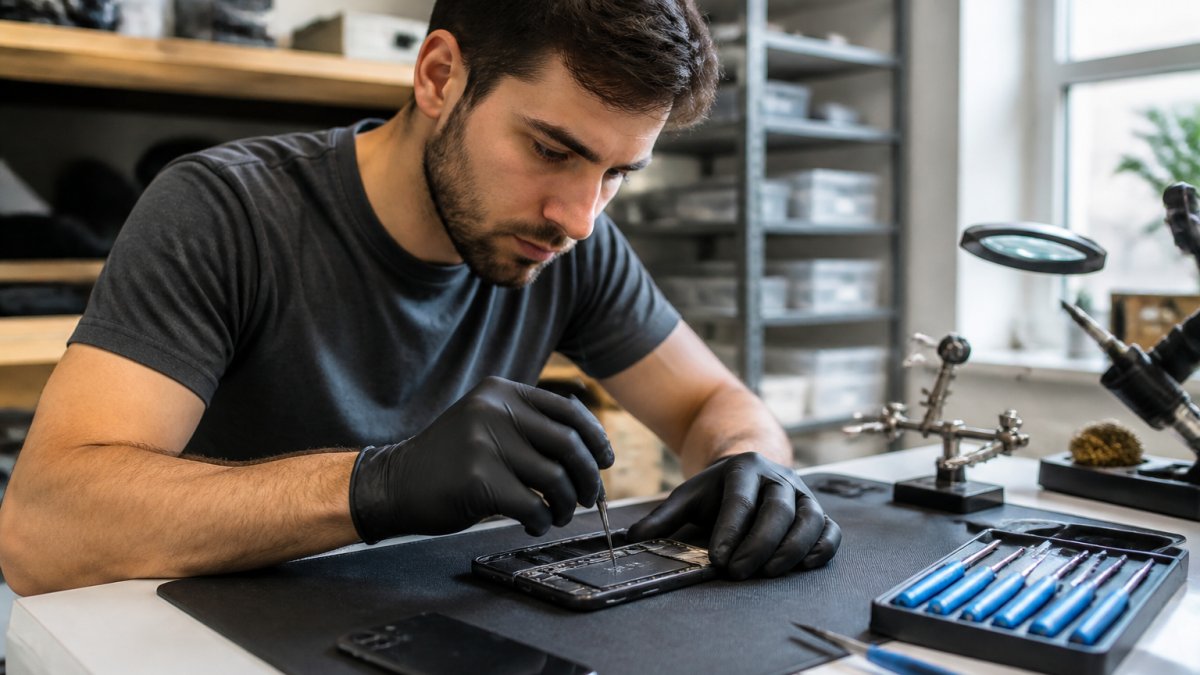
Broken phones still have value, though substantially lower than functioning devices. A phone with a cracked screen but fully functional internals typically trades for 30-50% of clean device value. Buyers can replace screens cheaply, usually $80-150 depending on the model, so they factor that cost into their offers.
A phone with water damage that powers on and responds to touch might trade for 20-40% of clean value, depending on how recently it was damaged and whether there's visible corrosion.
Phones that won't power on, have non-responsive screens, or have severe motherboard damage typically get rejected. Some specialized buyers accept these devices but pay minimal amounts, often $10-30, because repair costs exceed the device's value.
Test your broken phone thoroughly before shipping. Confirm it powers on, responds to touch input, and doesn't have major corrosion around ports or speaker grilles. If it meets these criteria, you have a reasonable chance of an acceptable offer. Contact the buyer before shipping if it fails any tests to confirm they'll still accept it.
PHONEPROBS can evaluate your broken device in-person and provide an accurate assessment of its trade-in potential.
Best Phone Trade-In Sites and Services
Multiple platforms compete for your used phones, each with different strengths. The best choice depends on whether you prioritize speed, maximum payout, convenience, or specific device types.
Carrier Trade-In Programs vs. Third-Party Buyers
Carrier programs, Verizon, AT&T, T-Mobile, offer the most convenient option if you're upgrading to a new phone. You trade in your old device in-store, receive instant credit toward your new purchase, and walk out with everything handled. The downside: carrier offers are typically 15-25% lower than third-party buyers because the credit applies only to new device purchases.
Third-party buyers like EcoATM, Gazelle, and Decluttr offer cash payments directly to your bank account or PayPal. Their base offers are usually competitive with or slightly higher than carriers, and you get flexibility on how to use the money. The tradeoff is shipping time, typically 5-10 business days, and the risk that the buyer rejects or significantly reduces their offer after inspecting your device.
Local options like PHONEPROBS provide in-person evaluation and often same-day or next-day payment. You avoid shipping risk entirely because the buyer sees the device before committing to a price. For devices with questionable condition or older models where shipping costs might exceed the payout, local buyers often make more financial sense.
Option | Payment Method | Timeline | Best For |
Carrier (Verizon, AT&T, T-Mobile) | In-store credit only | Immediate | Upgrading to new phone same day |
Third-party online (EcoATM, Gazelle) | Cash to bank/PayPal | 5-10 days | Maximum payout, no upgrade needed |
Local buyer (PHONEPROBS) | Cash in-person | Same day to 2 days | Uncertain condition, older models |
Steps to Prepare Your Device for Sale
Preparation directly impacts whether your device gets accepted at the quoted price or rejected outright. Most rejections stem from incomplete preparation, not actual device damage.
Remove your SIM card and any microSD card, these are yours to keep. Power off the device completely, don't just put it to sleep. Clean the exterior thoroughly using a microfiber cloth slightly dampened with water. Pay special attention to speaker grilles, charging ports, and the camera lens. Visible dirt sometimes triggers condition downgrades even if it's purely cosmetic.
Getting an Instant Quote and Price Lock
Get multiple instant quotes from at least three buyers to understand the market range for your device. Once you've identified your preferred buyer, request a price lock. This guarantees your quoted price remains valid for 7-14 days.
Screenshot the quote page showing the price, device details, and lock expiration date. This protects you if there's a dispute after you ship the device.
Shipping and Logistics
Most buyers provide prepaid shipping labels. Use a sturdy box with padding around the phone to prevent movement during transit. Many rejections stem from devices arriving damaged due to inadequate packaging.
Take photos of your packaged device before sealing it, including the phone, prepaid label, and sealed package. These protect you if the buyer claims the device arrived damaged.

Ship via a carrier that provides tracking, USPS, UPS, or FedEx. Save your tracking number and monitor shipment until it arrives at the buyer's facility. The inspection typically takes 3-5 business days. Once inspection completes, payment processes within 1-2 business days. Total timeline from shipment to payment is usually 5-10 business days.
Environmental and Tax Implications
Trading in your phone has environmental benefits often overlooked. Electronic waste contains toxic materials like lead, mercury, and cadmium that contaminate soil and water when disposed improperly. By trading in your phone, you ensure it enters a refurbishment or recycling stream rather than a landfill.
A single smartphone contains approximately 0.034 grams of gold, 0.34 grams of silver, and 0.015 grams of palladium. Refurbished phones extend device lifecycles by 2-4 years, reducing the environmental footprint of electronics manufacturing. Manufacturing a new smartphone generates roughly 85 kilograms of CO2 equivalent; refurbishing an existing device generates a fraction of that.
From a tax perspective, the IRS treats phone trade-in proceeds as personal property sales. Most phones depreciate, so you won't owe taxes. Keep documentation of your sale for records. If you sell multiple devices annually, the IRS might classify this as a business activity, which has different tax implications.
Conclusion
Trading in your old phone for cash converts unused hardware into immediate value while supporting environmental responsibility. The process is straightforward when you follow the preparation steps: wipe your device completely, document its condition accurately, get a price lock from your preferred buyer, and ship with proper tracking.
PHONEPROBS makes this process simpler with in-person evaluation and same-day payment options. Visit PHONEPROBS for a free device evaluation and get your quote today.
Frequently Asked Questions
Where is the best place to sell my old phone?
The best place depends on your phone's condition and how quickly you need cash. Carrier trade-in programs offer instant credit toward new devices, while third-party buyback services often provide instant quotes and faster payouts. Local repair shops like PhoneProbs can also evaluate your device and offer competitive cash prices. Compare instant quotes from multiple sites to find the highest offer for your specific model and condition.
What should I do before trading in my phone to protect my data?
Factory reset your phone to erase all personal data, including photos, contacts, and accounts. On most devices, go to Settings > System > Reset Options > Erase All Data. Remove your SIM card and microSD card if applicable. Sign out of your Apple ID or Google account before resetting. After the reset, verify the wipe was successful by checking that your device boots up clean. This protects your privacy and ensures the buyer receives a secure device.
Can I get cash for a broken or damaged smartphone?
Yes, you can sell a broken phone for cash, though the payout will be lower than for a working device. Buyback services and trade-in programs accept phones with cracked screens, water damage, and battery issues. The device appraisal process accounts for damage when determining resale value. Carriers and third-party buyers often have lower price tiers for damaged phones. Even non-functional devices have value for parts and refurbished markets, so it's worth getting an instant quote before assuming your phone has no worth.
Is it better to trade in my phone to a carrier or a third-party buyer?
Carrier trade-in programs offer instant credit toward a new phone purchase, which works well if you're upgrading immediately. Third-party buyback services typically provide higher cash payouts and faster payment processing, making them better if you need immediate cash without buying a new device. Third-party buyers also accept locked devices from any carrier, while some carrier programs have restrictions. Compare instant quotes from both options to see which gives you the best value for your specific phone model and condition.
BOOK YOUR REPAIR
This article was written using GrandRanker

Comments